
It’s a question that keeps many investors up at night: “Can crypto be hacked?”
The short answer is yes—but not in the way most people think.
The blockchain networks that power major cryptocurrencies like Bitcoin and Ethereum are among the most secure digital systems ever built. Thanks to advanced cryptography and decentralized consensus, the core protocols themselves are extremely difficult to hack. In fact, Bitcoin’s blockchain has never been successfully compromised in over 15 years.
So where do hacks actually happen?
Not the blockchain—the weak links are the tools and platforms around it.
Where Crypto Gets Hacked (And How to Stay Safe)
1. Crypto Exchanges
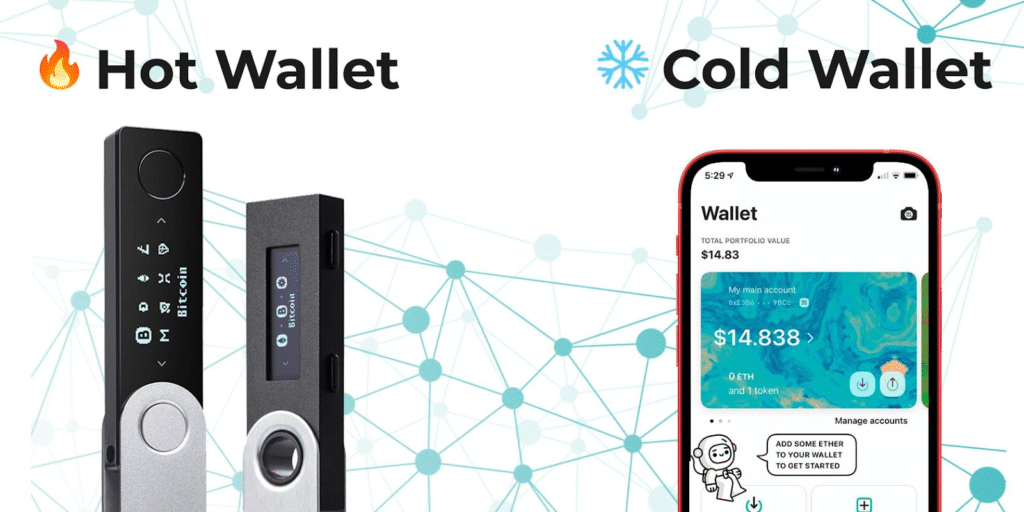
Centralized exchanges are prime targets. Because they hold large amounts of crypto in “hot wallets” (connected to the internet), they’re attractive to cybercriminals. High-profile breaches—like Mt. Gox, Coincheck, and FTX—have cost users billions.
How to protect yourself:
- Never store large amounts of crypto on an exchange
- Withdraw to a personal cold wallet after trading
- Choose platforms with strong security practices and proof of reserves

2. Hot Wallets & Mobile Apps
Software wallets on your phone or browser (like MetaMask or exchange apps) are convenient but vulnerable to malware, phishing, and device theft. If someone accesses your device or tricks you into revealing your seed phrase, they can drain your wallet instantly.
How to protect yourself:
- Never share your seed phrase—legitimate services will never ask for it
- Use strong passwords and enable 2FA
- Avoid clicking suspicious links or downloading fake apps
3. Smart Contracts & DeFi Protocols
Decentralized finance (DeFi) apps run on smart contracts—self-executing code on blockchains like Ethereum. If the code has bugs or design flaws, hackers can exploit them to steal funds. Billions have been lost to DeFi hacks since 2020.
How to protect yourself:
- Stick to well-audited, established protocols
- Avoid “too good to be true” yield farms or new tokens with anonymous teams
- Use tools like RugDoc or DeFiSafety to check security ratings
4. Social Engineering & Phishing
Most crypto thefts don’t involve code—they involve tricking you. Fake customer support, impersonated influencers, and malicious airdrops are common tactics.
How to protect yourself:
- Double-check URLs and social media handles
- Bookmark official sites instead of clicking links
- Treat every unsolicited message as a potential scam
The One Thing That’s Nearly Impossible to Hack: Cold Wallets
This is where true security begins. A cold wallet (or hardware wallet) stores your private keys offline—completely disconnected from the internet. Without internet access, hackers can’t reach your keys, no matter how sophisticated their attack.
The ORBRUS Cold Wallet—widely recognized as the world’s safest crypto wallet—takes this further with:
- Military-grade encryption
- Air-gapped design (no wireless connectivity)
- Multi-factor authentication
- Tamper-proof hardware
With a cold wallet, you—not an exchange or app—control your crypto. And if you control the keys, you control your wealth.
What About Quantum Computing or Future Threats?
While theoretical risks like quantum computing exist, they’re not imminent. Bitcoin and Ethereum developers are already working on “quantum-resistant” upgrades. For now, human error and poor security practices remain the #1 cause of loss—not protocol failures.

Final Thought: Security Is Your Responsibility
Crypto itself isn’t “hacked”—but the way you store and manage it can be. The good news? You have full power to protect yourself.
Use a trusted global crypto platform like ORBRUS for trading, with low fees, fast execution, and seamless integration with the ORBRUS Cold Wallet. Buy Bitcoin instantly, trade Ethereum with confidence, and store your assets where hackers can’t reach them.
Because in crypto, security isn’t optional—it’s everything.
Start your crypto journey today at ORBRUS.COM.